
Stress balls are simple but highly effective sensory tools that can support relaxation, focus, and emotional regulation.
What Is a Stress Ball?
A stress ball is a handheld sensory toy designed to be squeezed, stretched and manipulated repeatedly. Although originally developed as stress-relief tools, stress balls are now widely used by autistic individuals, children with ADHD and those with additional sensory needs.
Stress balls come in a variety of shapes, textures and resistance levels. Some are soft and squishy, while others provide firmer tactile feedback. This variety allows children to explore different sensory experiences and discover what feels most comfortable and regulating for them.
They are commonly used as part of stress balls for Autism and ADHD support, helping children manage stress through tactile and repetitive hand movement.
Sensory Toys and Emotional Regulation
Sensory toys are tools designed to support children with autism and ADHD by providing structured sensory input that helps with emotional regulation, focus, and calming overstimulation. They are commonly used in home, school, and therapeutic environments.
Children with autism and ADHD may experience challenges with sensory processing, focus, or emotional regulation. Sensory tools such as stress balls and fidget toys provide structured tactile input that can help improve calmness, attention, and self-regulation. You can learn more about how sensory tools support attention and emotional regulation in our guide on how sensory toys support calm and focus.
Why Stress Balls Are Effective Sensory Tools
Stress balls work by providing repetitive tactile feedback through squeezing and releasing movements. This type of sensory input can be calming and regulating for children who seek sensory feedback through touch and movement.
Many children with autism, ADHD and additional needs benefit from having a simple sensory tool that keeps their hands occupied. The repetitive motion of squeezing a stress ball can help some children feel calmer, more focused and better able to cope with challenging situations.
Stress balls are also highly portable, making them easy to use at home, in classrooms, during travel or while waiting in unfamiliar environments. Because they are simple and easy to use, they can often be incorporated into everyday routines without disrupting activities.
For more strategies on attention, focus and emotional regulation, explore our ADHD Support Guide, which shares practical ways to support sensory and behavioural needs in everyday life.
Benefits of Stress Ball Activities
Stress ball activities provide much more than simple entertainment. They can support fine motor development, hand strength, focus, emotional regulation and sensory exploration.
Many children enjoy the repetitive squeezing motion because it provides predictable tactile sensory input. This can help some children feel calmer, more focused and more engaged during play and learning activities.
Because stress balls are portable, affordable and easy to use, they are often included in sensory toolkits used at home, in classrooms and during therapy sessions.
Who Can Benefit From Stress Ball Activities?
Stress ball activities can be enjoyed by children with a wide range of sensory preferences and support needs. They are commonly used by autistic children, children with ADHD, sensory processing differences and those who benefit from tactile sensory input.
Because stress balls can be squeezed, rolled, thrown and incorporated into games, they can support both active and calming sensory experiences. This flexibility makes them suitable for individual play, group activities, classrooms and therapy settings.
Every child responds differently to sensory input, but many children enjoy the predictable tactile feedback that stress balls provide. This can help make activities both enjoyable and engaging.
14 Fun Stress Ball Activities for Autism, ADHD and Sensory Play
1. Squeeze and Release (Calming Regulation): The classic stress-relief activity. Simply squeeze the stress ball as tightly as you can and then release it. Repeat this several times to help relax your muscles. This simple repetitive action is often used to help children calm down during moments of anxiety or overstimulation.
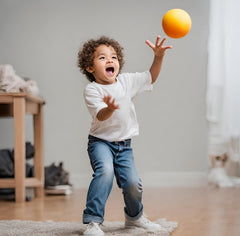
2. Stress Ball Catch (Focus & Co-ordination): Play catch with a friend or family member using a stress ball. You can vary the distance and height of your tosses to make it more challenging. Using stress balls in interactive games like catch can help improve hand-eye coordination, focus, and social interaction.
3. Balancing Act (Motor Control): Try balancing the stress ball on the back of your hand or even your fingertip. Challenge yourself to see how long you can keep it balanced without dropping it. Balancing a stress ball on different parts of the hand helps improve concentration and fine motor control.
4. Simon Says Squeeze: Play a game of Simon Says where one person gives commands like "Simon says, squeeze the ball once" or "Simon says, pass the ball to your left-hand." It's a fun twist on the classic game.
5. Stress Ball Relay: Set up a relay race where participants have to carry the stress ball on a spoon while navigating an obstacle course.

7. Sensory Exploration: Allow the child to explore the stress ball's texture, shape, and colour. Encourage them to squeeze, poke, and roll it in their hands to stimulate their tactile senses. This type of tactile sensory input supports sensory processing and engagement.
8. Stress Ball Massage: Use the stress ball to give yourself or a friend a relaxing hand or foot massage.
9. Stress Relief: Use deep breathing techniques while squeezing the stress ball. Inhale as they squeeze and exhale as they release. This can help manage stress and anxiety.
10. Stress Ball Target Practice: Set up a target (like a cup or a hoop) and take turns trying to throw the stress ball into the target from different distances.
11. Stress Ball Hot Potato (Energy Regulation): Sit in a circle and pass the stress ball around while music plays. When the music stops, the person holding the ball is out. This encourage movement-based sensory regulation, which can be particularly helpful for children with ADHD.
12. Stress Ball Squeeze Challenge: Time how long each person can continuously squeeze the stress ball without letting go. Keep track of records and compete for the longest squeeze time.
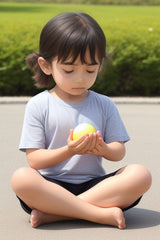
13. Stress Ball Meditation: Incorporate the stress ball into mindfulness or meditation exercises. Squeeze it gently while focusing on your breath and letting go of stress and tension.
14.Stress Ball Storytelling: Create a collaborative storytelling game where each person adds a sentence to a story, and whenever the stress ball is passed to someone, it's their turn to contribute to the story.
Our Experience Using Stress Balls
As Zac's mum, I've learned that sensory tools don't need to be complicated to be effective. Some of the most useful sensory resources are often the simplest ones.
Stress balls are easy to carry, easy to use and can provide immediate sensory feedback. Some children enjoy squeezing them during periods of waiting, while others use them as part of calming activities or sensory breaks throughout the day.
Every child has different sensory preferences, which is why no single sensory tool works for everyone. What matters most is finding sensory resources that help your child feel calm, comfortable and engaged.
Frequently Asked Questions About Stress Ball Activities
What can you do with a stress ball?
Stress balls can be used for sensory play, fine motor activities, relaxation exercises, focus support, hand strengthening and social games.
Are stress balls good for autism?
Many autistic children enjoy stress balls because they provide tactile sensory input and a simple way to engage the hands during periods of stress, anxiety or sensory overload.
Can stress balls help with ADHD?
Some children with ADHD find that stress balls help redirect restless energy and support concentration during learning and everyday activities.
What are the benefits of stress ball activities?
Stress ball activities can support sensory regulation, hand strength, fine motor skills, emotional regulation and focus while providing enjoyable sensory experiences.
Why do children enjoy stress balls?
Many children enjoy stress balls because they provide tactile sensory input, encourage active play and offer a satisfying squeezing sensation. Different textures, shapes and resistance levels can also make them appealing for sensory exploration.
If you're looking for more sensory support products, explore:
Discover more sensory tools and calming products in our Sensory Toys Hub, where you can explore our full range of sensory support products.